Showing posts with label charles plymell. Show all posts

Thursday, April 5, 2012

Giordano Bruno


He was a suspicious person to the state and authorities; had the nerve to assert the sun was just another star and that there might be intelligent life in the universe. Such talk would indicate he must be on drugs. They put him in prison and when he confessed to his beliefs, he was burned at the stake.
Over seven million of his kind are imprisoned today. The private prison industry lobby gives coin to our Roman police of God and State. At least one candidate for president still lives in Bruno’s age and would consider subversive anyone who would commit heresy against god and State. We have progressed only in technology since his age, over 600 hundred years ago, but unnoticeable in the age of the universe.
There is a part of our brain that has been retarded, remains the same despite the progression of other parts. Might as well admit it, though we have placed symbols like flag and golf ball on the moon, part of our brain like a rat’s brain. The daily killing news might as well be the white rat shrieking at the brown rat or other “different” rats that invaded others’ gates of rubble in their underground, unseen communities. They shriek and show their teeth and kill; there is no such thing as innocence.  The populations of humans have become entangled in their land; their wilderness has shut them in. Their numbers have increased, but not their contaminated brains.
The instruments of death have been improved.  Fire at the stake has been replaced by the more efficient 9mm bullet. One more sign that Mother Nature can only have her revenge. The innocence has been lost forever. One too many coyotes strung on fence posts tendon tied within tendon, one too many buffalo killed for sport. One too many innocent youths killed. The land that looks like the running wolves will shake off its population like fleas when Mother Nature has her revenge.
Charles Plymell
April 1, 2012

≈  


sculptures by charles plymell


previously published on website:
http://rustytruck.wordpress.com/


regarding the image of Bruno, apologies to dave boles, 
(the original graphic wouldn't load).

Thursday, March 22, 2012

A D Winans


It's finally out and the cover is beautiful.

---------- Forwarded Message ----------
From: Little Red Tree Publishing <mikelinnard@littleredtree.com>
To: slowdancer2006@netzero.com
Subject: SAN FRANCISCO POEMS by A. D. Winans
Date: Sat, 17 Mar 2012 15:40:40 -0400 (EDT)
A. D. WINANS 
Book Launch
        

San Francisco Poems by A. D. Winans.


A. D. WINANS

A. D. Winans is a native San Francisco poet, writer and photographer. His poetry, prose, book reviews, and essays have appeared in over 1500 literary magazines and anthologies, including City Lights Journal, Margie, Rattle, Poetry Australia, the New York Quarterly, the Outlaw Bible of American Poetry, and the Beatitude 50th Anniversary Anthology. He is the author of numerous books and chapbooks of poetry and prose. In 2002 a song poem of his was performed at New York's Alice Tully Hall. In 2006 he was awarded a PEN National Josephine Miles award for excellence in literature. In 2009 he was given a PEN Oakland Lifetime Achievement Award.

SAN FRANCISCO POEMS
by A. D. Winans 
((7" X 10") Paperback, 190 pages)


 ADVANCE PRAISE

"A. D. Winans is the poet heart of San Francisco. He tells it like it was and is. This splendid collection of his nomadic movements through the city through the decades is like no other. His eye, sense of the observed detail, his empathy for the ruin and resurrection, is unique. The melancholia of the old days contend with sharp updated quick shots of the city on the move.  A rich offering." 
    David Meltzer 
 

"A. D. Winans set his poet's eye on San Francisco, native ground, with all the passion of a true elder in the art of poetry. Here are the sounds and sites of a city of poets, wonderfully knit. A reader will find the deep humors of San Francisco alive and well in the hands of a master." 
    Neeli Cherkovski 

"As a poet, A. D Winans is one of the best writing in the U.S. today.  His work is powerful, human, humane and deals with primary issues." 
    Hugh Fox 
_____________________________________________________________ 

In his Introduction, Charles Plymell, writes: 

     Feminine force has sometimes been assigned to that beautiful City by the Bay, so it's natural it undergoes periodical changes. It is sometimes forgotten that it's a port, and, one it seems for every stormy life that landed there. A. D. Winans is the first person I know who was born in San Francisco.  During my love affair(s) there, it seemed I lived on all her streets, climbed her hills and while high on top of Twin Peaks, marveled at her jewel-like lights strung on streets below. She is almost surrounded by water; a fact the poet Lew Welch often reminded me of.  Fog could intertwine in the breath of sailors sipping martinis at the Top of the Mark, as I watched ships pass each other as lovers in the night, a reminder of the old Barbary Coast, or Mammy Pleasant building her neighborhoods through sex slaves and transients, newer captives with each experience a lifetime etched in memory. I certainly left my heart there, at least the presentiment that makes the heart see quicker than the eye. It demands an extraordinary vision to record this city. A. D. Winans has brought its inhabitants to life again for another look, however quick, however deep.  
    My sister, who died on the street there in front of an Indian bar was a transient, I was a transient, certainly the people of the tribes were transient as a Chinese lantern of the western moon, but the city always gave up its special feeling of home with all that implies.  I met the Frisco Kid back east at a book convention some years later. It took until this day to realize he was a native to this city, and in his poems he identifies places he went as a child that I was to know later and stake a claim to the magical image that always changed yet remained steady.  
    As presentiment is to heart, sensitivity is to creativity and the transient nature of this most beautiful city became the fiction that shed periodically like the snakeskin, the lines of itself.  Crooners claim to have indeed left their hearts there. Soul singers and philosophers worked on the docks. Jazz claimed it; Opera claimed it; Movies claimed it; Detective Novels claimed it; Rock and Roll claimed it (even built on it) Religious Vision claimed it; Madness claimed it; and yes Poetry claimed it! Even the Police claimed it. A. D. Winans lived it.

"His mind destroyed by shock treatments
And one too many police batons."

It was always the large canvas artist forever recorded lines where the real and unreal blurred and sometimes struck. Winans warns,

"Never place your hand over
your heart the
Marksman might think
you're marking his target..."
    There were/are many different kinds of poets who gravitated into that feminine energy. Like fish they traveled in two, even in schools, or more notably cliques. San Francisco was a natural basin for poets and was even known for destroying itself at times. When I arrived there, older poets I admired like Rexroth and Patchen were closing shop. On arriving in the city, Dave Haselwood, a fellow Kansan, gave me a copy of John Weiner's Hotel Wently Poems (which A. D. Winans says was an influence on his own writing).  It was during a short stay there that I had an altercation with a sailor and Neal Cassady in Anne's room and would eat a rather naked lunch with Leary and Ginsberg below the hotel at Foster's Cafeteria in "Polk Gulch." Events in that city seemed linked, too, a fishnet never quite ending. 

    Rexroth organized the famous reading of Howl in the '5Os that led to the famous obscenity trial where Ginsberg's vision of Marlon Brando, the Icon of the year, led to such hyperbole, even the best minds of San Francisco became forever obsessed.  To this day, City Lights Bookstore enjoys the tourist trade from the publicity of the trial. While the author certainly didn't "abandon" his moloch and had no reserve for taking thousands from " Moloch the stunned governments," it changed lives with such force as to create a Beatnik millionaire from a Navy officer and graduate of the Sorbonne, Lawrence Ferlinghetti. A similar institution arose in the Fillmore by another NYC city cat Bill Graham who saw fame in the old Palladium and plunged his vision to the depths of this city. To imagine being a poet who was born in and grew up in this city is to see a history that A. D. Winans records so accurately through his poetry.   
    While poets protested against money and government while building religious and sexual constituencies in visionary fervor, or became jaded, or "trippy" Winans kept his style. Jack Spicer frequented and conversed with Winans at Gino & Carlos. Jack Micheline, his friend, who had the chops, wanted to really turn over those ash cans of millionaire dollars seen prudishly by Ginsberg as "Filth! "Ugliness!" before the politically correct safe, academic mainstream took over. Turf also didn't bother another of A. D. Winans' friends, the late George Tsongas.  Tsongas wasn't a political poet, but he talked politics every day. I, like them, didn't care for the labels.  I could see as much in a Wyeth as in a Blake. The scene shifted again towards the Haight Ashbury (where A.D. Winans grew up a child).  The Go-Go clubs flourished while Sonny Rollins played at North Beach dives for a two-drink minimum. At the old Avalon Ballroom I saw a handful of hippies turn out to hear an "unknown" Bo Diddley. Meanwhile, if one looked closer at Winans' poetry, there were constants.

"I have observed old women
fumble in broken down purses
for non existent dreams."

In the city where Winans was born, he grew up with those truths that were etched in faces that changed as well, but probably not what the tourists were seeing.

I don't know if poets see differently than other folks. I have certainly been in the presence of some who missed what I saw, and I've certainly seen things I didn't want to see. It's obvious some poets are compelled to write what they didn't want to see in the first place. That was the impression I had from Bob Kaufman, one of Winans' companions, who took a vow of silence. 


A. D. Winans (left) and Bob Kaufman (right) 

In San Francisco Poems Winans records a lifetime of the streets.  They are photographic in that they can see a line in a face added by time, even the atavistic lines, that might cause one to avert one's eyes. For his is the city of many poets, and as Robert Peters offered, "poetry munchkins." So there is definitely turf. But Winans reminds us  

"...that every meat packer 
And fisherman, every waitress 
And construction worker, knows more 
About life than your average poet."  

     I connect with Winans' poetry in memories when I walked the streets south of Market down to the docks always in pairs, if not in groups, with our longshoreman hooks prominently displayed in our belts, for it's an area a tourist would go at his peril, and poets, not that many.  But Winans is one of them who did.


"You can see from the 
Look in his eyes the 
Scar on his face 
That he's someone 
You don't want to mess with 
His eyes survey the scene 
Like a periscope 

He's a two-bit thug 
Looking for action 
An old beat cop looking 
For a head to bash 
He's Boston Blackie 
And Al Capone rolled into one..." 

    In these lines, Winans not only reveals the faces on the street, but the tragedy therein, where a transient, like Jack Black could find a home. Where the hoboes, hookers, "rounders," and finally hipster poets came to the tenderloin, walked on Turk Street, and ate at Compton's Cafeteria. Her history keeps sucking up the changes, the tragedies of every phony, every dreamer, every hero, and every loser. And Winans' city is unique with the many poets it has embraced. Harte Crane didn't have that situation in Akron. And within that change, that turf, that carnival, that mainstream of visionary-cum-academic, there is an importance to me that I claimed as my home, that space no matter the physical changes, there was the emotion of that space, the space Winans keeps occupied with his poems, that street where my epiphany is his and the poets he knew. It's the hometown he saw both as a child and as a grown up, that very scene that must be read by its inhabitants, its tourists who run into the bookstore, or its poets who must live the boundless postcard, however briefly. 

"I have sat 
One too many evenings watching 
Old men and women 
Eat their last meal 
One eye on the desert the 
Other on the obituary column"      


- - - - - - - - - - - - - - - - - -


This book is available online at www.littleredtree.com 
$19.95 
SAN FRANCISCO
by A. D. Winans        

($4.00 shipping within the US. Overseas orders will be
invoiced separately with additional shipping costs)

Michael Linnard
Little Red Tree Publishing, LLC
635 Ocean Avenue,
New London, CT 06320 
Tel: 860 444 0082
Fax:860 440 2569


Following us on facebook and twitter

= = = = =

Sunday, December 19, 2010

Drowning like Li Po in a River of Red Wine - - a Review by Charles Plymell

◈◈

charles plymell, photo by phil scalia


From the shadows of a home town always rising from ashes with eternal fog lying in them like a heavy spirit comes... The Frisco Kid!                            An appreciation by Charles Plymell


Drowning like Li Po in a River of Red Wine by A D Winans is a book to be proud of. It’s a pick-it-up-random poem book that gets right to it, with selected poems organized chronologically from past publications, 1970-2010. One might think that 364 pages of verse (and colophon page) would be a lot to take in, but it is not. Everything is all right, like the years went by, exactly right, bringing it all back home. San Francisco was home to us all.  She opened her doors to everyone, alone, weary, and timeless... from Jack Black to Jack Micheline. Everyone got a taste of that home, but Winans is the only one I’ve met who was born there. He must share her coiffed comeliness and spiritual highs, splashing her nacreous pearls from deep black water splayed into the fog of love, the mist from her eddies pressing back the lusty egalitarian thrust until it obeys. It always seemed a small town because it’s vertical, on different planes, each neighborhood seething with scenes. During my limited tenure, it seemed I lived on every street, if not neighborhood, or knew someone who was in this or that scene. And floating through those different planes were layers to its natural beauty that gave off the essence of love but could also sink down darkly and cruel as hell. Through Winans’s eyes one can live those streets again, like a Bob Kaufman looking out the window of a Muni bus in silent study of all action passing on her streets to the last window-framed panorama. 

The book too, is exactly right, as a book should be made. The poems aren’t tucked in as a filler to the pretentious pages of slick magazines; they are presented in the best selection of typeface, the poems placed correctly on the page. Li Po would have approved. It has the right feel, the right dimension, and the right geography to go back to and turn the pages like wrapping dreams.

Winans and I are about the same age, and we both discovered the Beats in the late 1950s. We both had unconventional childhoods. My best times were in the fifties. We heard the McCarthy hearings in real time. We developed a similar political philosophy somewhere between Li Po and Upton Sinclair. Like most poets in the Bay Area grown into the sixties there was politics in our poetry. He served time in the service. Mine in the ROTC ... a Clinton/Bush deferment. I arrived in his old middle class neighborhood, the Haight, as the decade of the sixties began, before the kids took over the streets from little Russian ladies.  He knew poets I did and the bars they read in, and the magazines they published in. San Francisco was constantly changing, sometimes overnight.

 I didn’t know Winans in San Francisco but met him later at an Independent publishing event, “Small Press.” We took part in some of their organizations.  We learned how the game was played and over the years watched it change into the “Politburo of Poetry” as all things government do with friends rewarding friends. Over the years, we’ve corresponded and shared our views on poetry, political scams and awards.  We spot the phonies and neither of us much cares for labels. We’ve seen “revolutionary” poets & middle class kids get permission to protest.  We’ve seen famous poets howl against Moloch and the government only to receive several thousands of government money and keep the Beatnik flack, not black, flying at the landmark tourist bookstore in North Beach. We’ve seen hypocrisy in all flavors in all the poets the city spawned. I’ve often wondered how he sees the invasion on his home turf. 

My biggest regret is that I wasn’t with him when the great jazz clubs flourished in the days of Billie Holliday that he remembers in his poems, or the great blues legends like Johnny Lee Hooker. Yes, the times were always changing there. By the time Pam and I went to Mike’s Pool Hall with Ferlinghetti (Pam was underage), the GoGo girls were dancing in every joint. I got to see Sonny Rollins at an embarrassing two-drink minimum gig in North Beach when he was either too sick or too broken to wail. Yes, the city was built on Rock n’ Roll, Fillmore and the Avalon et. al. But the poets knew that it was really re-built, again and again. It all comes back in the works of Winans. It comes back as subtle and real as Bo Diddley’s words at the Avalon, a thriving line-in the street psychedelic hall bringing us the new sounds and lights. His words haunt me when he came to play to a handful, this “unknown” who said “and here I am now playing for you. Mercy Mercy Mercy.” I think I know what he meant. You will get the full history with Winans’s poems. They tell it real. San Francisco was always home to the outcasts from any origin. They became family. The moon on the water beckoning for all comers. The sun over the hills and bridges all bringing commerce, ships going to war. Friends and families living and dying. A changing city like the long nights and sunny days.  My sister died in that Chinese Lantern of the Western Moon.

Jack Micheline came by to rally me to read and bring the “word” to the people. I had a good job on the docks and was starting a family. Besides, I said to him, how would you compete with the fame of sensational book trial no matter the poet and poet storeowner were (out of town) and let the Japanese-American clerk who sold the book stand trial, just in case it backfired. The days of Life and Time are over. They just want the tourist version.  Micheline left dejected, but hopefully to Gino and Carlos bar to have a drink with Winans and revitalize the words again.  Or the Anxious Asp to hear poets insult the poets from Cleveland in their hippy drag. It was like that. It could be a tough town. We didn’t walk to the docks with Longshoreman hooks in our belts for nothing.  The town was built on many layers of compassion and destruction, giver and taker, almost religiously. I wonder sometimes how a poet would live all his life there.  Probably by writing lines to William Wantling, an example of the many poets who walked the streets of his town: “Looking into the cracked lips of sorrow/I walk the harsh streets of tomorrow.” (Pg. 297) Pick it up and open it anywhere.  But to really find out how the poet down South who wrote about the poet up North and what happens with the poets from the East who come to the West and drank at the bars in Winans’s home town, you’ll just have to open the book in a river of red wine on pg 183.

                                                                                   
◈◈

some links for charles plymell and his early publishing ventures in san francisco in the early sixties
http://realitystudio.org/bibliographic-bunker/charles-plymell-and-now/

http://realitystudio.org/bibliographic-bunker/charles-plymell-and-now/archive-of-charles-plymells-the-last-times/ 


◈◈

And a review - by Neeli Cherkovski  - can be found on here:

Among A.D.’s direct antecedents are Jack Micheline and Bob Kaufman, two outlaw literary characters, even among the outlaw beats. From them, the poet was inspired to define his poetic stance from the power of ordinary speech. . . [h]e began to hone a keen and original sense of observation, a matter-of-factness standing in direct contrast to literary trends of the 1970s and beyond. There is a theme of opposition in these poems -- an opposition to literary standard-bearers. This is evidenced dramatically in an elegy for Kenneth Patchen . . . “where were they when you lay in your deathbed/crippled and dying/where were they when you lay starving and broke?” . . .

The poems dive deep into the past -- memories -- hidden moments or scenes on the raucous streets of San Francisco’s North Beach . . .

old men and women leaving behind their sins
dressed in simple hats and death black shawls
bowing to the holy eternal mumble
of dead saints dressed in gold thirsting
for the wine that is denied them

This rich language hovers on the edges of the surreal. The poet floods us with finely-drawn portraits. They draw on time bumping into time, rip-tides of images, observation torn out of pathos.

the heads of the masses staring always
staring searching for paradise
fat and content smoking tijuana slims
stone faced magicians. . .
◈◈

Neeli Cherkovski  is an applauded poet, critic, memoirist and literary biographer.


 cherkovski, photo by jannie dresser


◈◈

Sunday, April 4, 2010

Charles Plymell

◈◈◈◈◈◈◈◈◈◈◈◈


Out of Wichita, Kansas . . .


Charles Plymell


Charles Plymell grew up in Wichita on the Kansas plains. He lived in San Francisco in the sixties where he met Neal Cassady – among others. In 1963 Neal and his girl Anne Murphy, and Allen Ginsberg moved in with Plymell in the large apartment he rented at 1403 Gough Street in the Haight area. Later he lived in different locations in America, finally ending up in the state of New York where, with his wife Pam he settled in Cherry Valley, a couple of hours out of New York City. Plymell and Pam started Cherry Valley Editions – publishing - among many others - William Burroughs, Herbert Huncke, Allen Ginsberg, Janine Pommy Vega, Ray Bremser.


◈ ◈ ◈ ◈ ◈ ◈ ◈ ◈ ◈


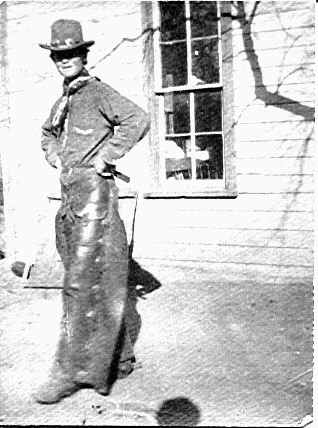
Charles' father Fred Plymell, Oklahoma 1920s


The following poem was based on a dream of his father in 1984.

From Ancient Lands (Vernal Equinox Dream) Washington, D.C. 1984)

They walked the sunrise, soul-burned travelers,
wearing hats tilted like Autumn's landscaped hills.
Rough faced sailors, eyes laden like water rills
scanned the horizon till shorelined stars unfurled.

New wind in the air for those waft on the seas,
new smell of earth dug away to align the leys.
And they came forever wandering, as if set free
from cracks and rifts and vortices, as when some
great stone moves from its natural mortises; they
sailed the wind, a front of chaotic charges ignited,
careless in radiance of patterns of heaven unsighted.

(At 5:30 a.m. I awoke from a dream of Vernal Equinox
like a farmer called early for spring plowing, or a
driver with an early start knowing the aching miles
that stretch across the long heart of the prairie).

In the early days my father left his coffee pot
on the stove in his sod house, and he drove
cattle down to Galveston town, and he saw the
lights beckoning on the port side of the bow,
heading for Italy, brought back a color picture
of the Isle of Capri, and when he returned the
next year, the coffee pot was in the same place.
And the picture for years was the only decor in
the farmhouse room under angry rolling cyclones,
with their terrible pitched-moan to stillness,
silent as trowels through the loess and grass.
Blowing dust through cracks of doors and windows,
sculpted the still waves day and night. The house
took in the wind of the wolves' howl, the song
of the coyote, and the long train whistle dragging
the reptile's whispering scream of time; the pioneer's
pitch of desperation, first loud then soft, and
then distant into the stars where cowboys herded
the dark clouds out of the sky, where sailors lined
the beads like stars while the bodies of wanderers
happily grew again from the earth's bed with gentle flag
and stay; the blossom'd buds in May blew like many
visitors who come when the new wind comes that
keeps me half awake half dreaming... so very many.

My father rode down through the equinox in a perfect
visioned dream as if he had never been away. I
wanted to show him the nation's capital, but he
was here on other business; he wanted to find his
merchant marine papers, why, I don't know, maybe
to show passage through eternity and beyond,
like a journey pulling toward yet another shore.

'Look at the beautiful masonry,' I said to him, 'look at
the Merchant Marine Building with its exquisite work
of brick and tile, and bronze doors, and frontispieces.'
We went down to a little section of the city by the sea.
'Oh,' I said to him, 'this is just like Italy.' The marble
and the little streets and the glassworks and the women
who walked there, the women he joked with, and the sailors,
and the bricklayers, and the carpenters, and the threshers
from Kansas long ago, drifters passed in the street
recognized in memory, composite in chirality, patient
in formality; they, the lined-faced, the rough-hewn
people who walked the narrow streets by outdoor cafes.

He knew where to go, not up to the marbled entrance
but down a side street low, near a building, where,
in the dust of the sea bottom, beneath a small cupola
stood a woman by a counter of endless floating files.

'Draw me a picture of the last scene you remember
as a mariner,' she said. He drew a picture of himself
sitting on a bed, his sailor's hat cocked to one
side, a coffee cup on the table. He asked her jokingly,
'how do you want me, ma'am, hobbled and ironed?' She
helped him look. 'How far back?' He didn't know.
Down in the sea dust of a bottom drawer they found
his papers waterstained brown. He pulled them out
and waved and yelled as if he had found passage
toward the wild fix of stars, or Isle of Capri.


Neal Cassady and Anne Murphy,
photo by Charles Plymell, 1963


SONG FOR NEAL

Oh really really Neal
  first love the automobile
  drove a 34 Ford with suicide doors
and a stick shift on the floor

Ego pressing onward
  tight skirt in the night
Popeye Olive Oyl tryin to make it right

Dragging down the avenue
  checking asses in the rearview
Ann-Marie scored pills and didn't want to fight

One hand on the wheel
  the other copping a feel
stole a car in Denver
           Just to hear it peel

Clock on the dash reading 10:18
    past the neon diner
      last stop for Benzedrine
then another scene
  bobby soxer mommas
tarot card teens
   word surfers making a deal
 his addiction only to the wheel
one hand on the gearshift
       fastest word in the west

 Ann Marie was in theatre
but he jumped the parking meter
   flower children all over town
the fatsest word the found
     before he drove his bus further
 he traded her Chevrolet coupe
for an old Pontiac four on the floor
     drove to Bolinas to score
     up the hills around the curves
gear it down pump the brakes
     gone since speeding past the Avalon
Old Mother Ginsberg back seat drivin
        hanging out the window to keep from slidin

Back to Frisco he carried Ann Marie up the stairs
               unpacked his boxes full of tapes of past lives
         from a medium in Palo Alto
he didn't have any dough
     shoe box full of reefer though
and Ann in bed on top of him
             look at her teeth he said
lupine like on blood they fed

He scored a faster car from someone who
          wanted him to be true
   and telephoned from Denver, Cincinnati, Kalamazoo
he came back from seeing Kerouac in a hurry
               patrol cars in his mirrors still blurry
parked in front of Gough Street in a '50 Plymouth Fury
           saw Anne Marie with some pills
    heading out of town
he jumped in the driver's seat and spun that Fury around

His last drive was longer to the Mexican border
               generations passed like a long train
  with boxcars that he used to work on
    new railroad tracks seemed chromed with cocaine

The engineer's whistle was low and sad
  brought up memories of a young dad
     doing hard time for two joints
   given in generosity because he was that kind of guy
to undercover fuzz who gave him a ride and a lie
  not that different from the people he knew
who never came to his rescue

Maybe they thought San Quentin was good for him
           but I thought him better smoking boo
        he was the fastest road warrior
but what he did wrong he never knew
         his eyes looked liked a worried mind
as if he wouldn't arrive on time
   but Black Elk knew that for the wild
death comes always in the wrong season
   the beds of prison will lock down the reason.


                                   Neal


           hey charley, did you bring the gloves
   

◈ ◈ ◈ ◈ ◈ ◈ ◈ ◈ ◈


The following are from Plymell’s recently published book Eat Not Thy Mind.


LOCKED IN SAVANT HARMONY

The snow fills the creek beds
loaves form in the night’s wind
where creatures gather seeds
in cauterized moon wounds and
smells of dark green open the solstice

the mind aligns life and death on the street
or in the heavens and on the horizon
where begins a search for lonely places
like the fools who take another drink and
drape their souls on a stool in another bar

still new for a second smile
into the debris of redundancy
wiping the bar of bad dreams
sorry again for the delusions
mistaking those two different
people youth and age
sunrise calling through the
window panes of skeletons
reveals a formula for motion and scale
depleted in morning’s commerce and enterprise

give me your many lips
flashing in presentiment
that I may catch the boat
to that part of space for charity
along an illuminated twilight line
to run out the knots of a shaded hemisphere
in sunset trace beneath the moon spilled wine.


GET LOST

First 80 degree day
After a long slice of silent ice
Stilettoed by the oily bowels of snowmobiles
Numbing their last drunk snowy reaches of the field.

The lawnmowers begin cutting
the commerce of the day
Dork peeled rubber
The small-town carnivals of June
Goonies come out and sit on stoops of river towns.

More asthma, more decay;
The air laden with chemicals
Greying New York faces from Manhattan
Airless days and nights
Old men’s oxygen and morphine
Loose grip on everything
spans the games you
loose your soul in
Meaningless material objects
a lifetime of deals coughing and dying,
either way losses all.
No more colors in the jam.
What are their titles and authories?
General Custer’s Junior G-Men
part jerk, part fuzz, part fink.  

                             
                                                        Collage by Charles Plymell


IVY

Hitch a ride from the gray area
Take a bend in the road going south
out of South Bend somewhere imagined
To the Delta dirt where the cotton is pure
and the polka dot shirt flies in the wind

Where blues are bad and words are dreams
And the random bells are always ringing
Like quantum operators in the binge of time bring
Echoes at night as sweet as first Phoebe Snow

But a blizzard rages up north
winds blow broken songs from a chain of paper doll line
the horizon each censored for emptiness and force

Black ice is on the asphalt and the street lights make it shine
The heart is always first to know the future before the body
And the brain bring the problems of a homeless mind
They say 23% of the universe is dark matter and
73% is dark energy and for all the rest, open your eyes


PRESENTIMENT IS IN THE WIND

Black ice is on the asphalt
and the street lights make it shine
Blue Iris is beginning to fall
and the night lights fakes its lines
The heart is always first to know the future
last to hold the problems of a homeless mind
We used to work together for the ancestral heart
My sister, Betty hitchhiked into Pocatello
where those who rode the rails left their signs
above their camps of embers
the last beans cooked in the cans
A century later a bird somehow knew
I was a soft touch and followed me for seeds
Its eyelids had not formed open and it fell prey
I named it Betty Broken Song
Only the wisdom of luck can follow the
tangled infinite numbers of paradise
that glisten and dance along Westbound rails
under the stars lay its darksome dins of clay.


A GREAT GREEN BANDANA AND A YELLOW BANANA

A member of the eternal road crew waves traffic
The guy in a dump truck eats a banana
the wind in the grass waves away the years
of minions finding a way home
some synchronicity in tiny desecrate units
Max Plank waved in the 20th century
Max Ernst had a screaming headache
a Scarab tapped gently on Jung’s window wanting sex
Coca Cola still contained the leaf.
Organic trends of the next century
upscale restaurants serve olive oil
Herodotus wrote that the Romans preferred oil to
the barbarians to the south who made butter
the green bandana waving out the Blue jay’s chipper song
and its lonely in the shadows when they close the open road
to dwell on ‘self’ will lead to peanut butter and colas
a Banana Republic emerged from and enlightened
Constitution, pre-emptive strikes and a mercenary army
it’s all over kids, compulsory education didn’t work
freedom didn’t survive illusion and greed & fat and corn syrup.


NO PAIN INTENDED

The theory of wounded dust like
A psychic fire-final transformation,
A virus after a brand new host to the final party,
                                                              There.
Cyanic voices and gray faces of didactic melancholy
Sappho without her cell phone popping a pill under the olive tree
Cleopatra among hot dwarfs and superstars, her
Eyelids inflamed by the disease of sunset on the orphan’d planet
Where seas tumble, trees are blown by broken hearts.
I’d rather be in Kansas where everything is dead and gone
Except the smell inside a 1948 Mercury with the soft green
Lights on the dash memories that await the children of a ruined world.


PHILLY DELPHIC

Get all those demons out of the white space, white noise
exorcize the white house Oh Nicola the Tesla coil
at the click of your mouse electricity will annihilate space
Orwellian conspiracies so subtle down the turnpike of
nothingness where power grids go black in virtual death

Until one day there is a message and it
is not on the phone, nor on the computer
It comes from signals deep down in the body
where the fortune teller lives, foot in one shoe
dangling off the bed of American future fucked
in the truck stop of nowhere down the chaos road.
Bend down America and kiss the asphalt, you voted for it.

The crusaders are robbing the peasants again
There is evil in their agenda, demons in their house
If you are born twice you can work in deadly Dick’s Iraq
and make seven thousand a week electrifying the showers.
don’t say there’s no future, son, for good criminals
hysterical religion in faces behind the candidates of guns
those slaughtered buffalo greedy eyes
eyes of agenda to lionize those lyin eyes
stolen eyes, waiting for the westbound train draggin home to
Toledo and Chicago on clacking Amtrak rails that flash past
cattle cars with hysterical death ribbed vision of strobe shuttered
savage rails over an historical mountain over there name Vinyl that
will be climbed a hundred years from now by Ronald rotten clown
ghost on endless telegraph poles of Custer the loser,
demon Dick’s propaganda, hype and hypocrites
in the last gasp of Democracy.

The jumbo laugh of a dying empire with so much bad karma
electromagnetic torrents of toxic sunsets more beautifully
seen in the morality of the dead eyes scanning for security in
the crimson sky like old day glo tinctures in the summer of love
Pete’s lost plaint I ain’t gonna study war no more
in dead afternoons beyond banging winds of Interstate
of no escape on poisoned exit ramp
Johnny Cash in his coffin all dressed in black
westbound trains roll on
Eat not thy mind young father in the trailer park over there under
the power lines contemplating suicide, mother on pills, baby crawling
toward the television’s arts program of grandmothers’ quilting party.

Brother kept driving on speed to make a dime addicted to the wheel
sister scream bid in a shear wind cold voice at her lost house deal
streetwise Jones found dancing in crack whore bones mute and blue
and may you sleep tonight with jazz in your grave, Claude Pelieu.

Hard luck and hard looker, mean hooker, deep heart, dark mind
commercialized vagina Cum Laude from tattooed neon school
faded mascara in glamorous midnights, too
slow jazz and melancholy words of last love for you
Albany news sexual battery beating homeless murder robbery.
Bend down America and kiss the asphalt, you voted for it.

They are murdering the flowers again
destroying the poppies in Afghanistan
machetes drawn, ATVs pulling iron harrows
full battle camouflage narc state uniform
real colors blood reds and dark greens
crushed into landscapes and set aflame
beauty tangled in charred grey faces
hip hag muppets in red and pink crepe
while the young farm girl cries at her
favorite red and gold shawl burning
her mother leans against the trees
her eyes turning toward the heavens crying.

If we can’t destroy the enemy we can damn sure
destroy their flowers in photo ops the goonfaced
joker criminal of high order looks from helicopter
view and thinks to himself that it’s one less
shipment for the cargo planes to smuggle away.

Less risk for the contractors to handle it, anyway
less hands to pay in coffins like from Vietnam
while campaign ads about who is sleeping safely
blurs the visual numb realities in capitol scandals.

But remember we can always smash your flowers!
like spraying weed with toxins and chopping them
down in Central America, defoliation in Vietnam.
kids who kicked the can on down the road have gone
to war again in the latent gene the paranoid dream
of every town, camouflaged to capture the weed and win

Leaning on their rusted pickups they change like
transformer toys from Bud to bullets when the call is out
imprison the most helpless and forsaken strays among us
ready to destroy again for whatever the authorities preach


NAME OF HOTEL

It began as a visit to San Francisco after many years. We checked into a famous hotel. I can remember its name because I was having a dream that typified Alzheimer’s. I realized in a dream fashion how horrible it is.

Somehow I ended up in a district where my sister died on the street. I can only describe as a combination of Portrero Hill and the Marina only it resembled how I remembered the Filmore over thirty years ago: Dark, burned out, vacant, and crumbling.

I began walking and walking seeing only shadows of old Mini rails and cars. The streets were black noir as if it had been raining many nights. Occasionally a fleeting figure would pass and I would ask it where the hotel was but I couldn’t remember its name. I would ask to please help and I went through the names of famous hotels I could remember, but none of them sounded right.

I climbed a hill of burned-out tar rooftops still smoldering and heard a voice in the distance comment that it was the kids who set them afire. I found a path down the mound and was exhausted when I saw some figures standing in front of some dim neon clubs. A taxi seemed to be approaching when one of the women outside the club hailed it at the same time. I asked her to please let me take it because I was so tired I could go no farther and I had to get back to the hotel. She said they were tired too and needed the taxi.

I walked farther to a food stand and ordered a dish of something with a side of something. It came out turned over resembling a slice of pizza upside down. Though it wasn’t what I ordered, I decided to take it anyway and got out my billfold to pay. Photos that I didn’t know I had began falling on the ground along with my credit cards. I tried to pick them up to look at them as more fell out. I saw what looked like a wallet lying at the corner of the counter. A heavy woman moved in front of me just as I was able to recover my pile of contents to place on top of the billfold on the counter, thinking I would cop the whole pile and the left wallet. Then someone copped the whole pile and ran. I asked an old black man standing nearby if he saw who took it. He motioned to a doorway across the street and said he thought the person went in there. I went to the door to look in. It was another club, and I asked the black man at the door if someone just came in. He asked me to describe him, which I did. Then he said no one of that description had come in and that there was no need to assume the person I was describing was black. I said of course not and he shut the door in my face.

One of the women didn’t take the cab, so I started walking with her hoping she was going in my direction because I couldn’t keep going without help. I pleaded with her to let me walk with her. She asked where I was going and I told her I couldn’t remember the name of the hotel. Then I thought of Glenn’s address at 1403 Gough Street but realized he hadn’t lived there in years. We walked toward her place. I hugged her and told her I needed help. Her body became like an empty bag. I hugged her more and asked to go home with her and kissed her. Her mouth was hollow.


Image of unknown origin in an email
from Bob Branaman to Charles Plymell.


◈ ◈ ◈ ◈ ◈ ◈ ◈ ◈ ◈ ◈

                             
The young Charles - Wichita, mid 1950s

◈ ◈ ◈


Charles' mother Audrey Plymell, Oklahoma 1920s.
Her great-grandmother was on The Trail Of Tears
when the Cherokee were driven out of the Southeast,
she later married a white man in Arkansas.

◈ ◈ ◈ ◈ ◈ ◈ ◈ ◈ ◈ ◈

Charles Plymell was born on the high plains in Finney County, Kansas in 1935 . His father was a cowboy born in the Oklahoma Territory, his mother of Plains Indian descent. After working in most all the western states at many types of laboring jobs, he drifted between Los Angeles and Kansas City during his hipster years, steeped in jazz, race music, and country. Later he settled in Upstate New York with his wife and children teaching and tutoring courses in institutions where he could apply his knowledge and experiences. Many of them were courses in prisons until their population, increasingly victimized, due to the unconstitutional mandatory sentencing and the terrorizing political war on drugs made the experience too overwhelmingly emotive.

His master's thesis at Hopkins was quickly published by City Lights titled Last of the Moccasins and then by Europa Verlag in Austria. After it went out of print, it was reissued with the Los Angeles' artist Robert Williams' painting on the cover (now available as an ebook). Williams went against his own policy of never doing covers only because Plymell was the first printer of Robert Crumb's Zap Comix. A few copies remain in print and are available from Water Row Books in Sudbury, MA, which has published a Plymell Reader titled Hand on the Doorknob. Many books, among them the Scarecrow Press book, Forever Wider, edited and introduced by Robert Peters.


Plymell was cited by Governor Finney of Kansas for his contribution to the people as well as the World Book for being the most promising poet of 1976. He opposes the National Endowment for the Arts and has criticized it in print. He claims it became a politicized unjust system feeding on its own mediocrity and self-contradiction. His views were mentioned in the New York Times in " Notes on People" and again in "Washington Talk". He was subsequently blacklisted and has never received any funding from any federal, state, or academic agency to pursue his creativity. http://www.cherryvalleyeditions.com/html/charles_plymell.html


Eat Not Thy Mind published by Glass Eye Books / Ecstatic Peace Library, 2010. Cover illustration a collage by Claude Pelieu. Available from
http://yod.com/yodstuff/product_info.php?products_id=6469


Charles Plymell has 12 books of poetry published.

The following are only a few of the sites where Plymell’s work can be found; from these sites there are many connections - including interviews with Plymell.


re the photo of Neal laughing in the bus:
 "I took a pair of gloves to Neal for his bus drive. He was joking about his hands on the old steering wheel made of carbon black. He introduced me to Tom Wolfe. I had already met Kesey with Neal at parties, but they were all getting ready to drive trip etc." Charles.

◈ ◈ ◈ ◈ ◈ ◈

five bullet hit of the week ●●● ●    ●  http://catfishgringoriver.blogspot.com/
 

◈ ◈ ◈ ◈ ◈ ◈ ◈ ◈ ◈ ◈ ◈ ◈ ◈ ◈ ◈ ◈ ◈ ◈ ◈ ◈